
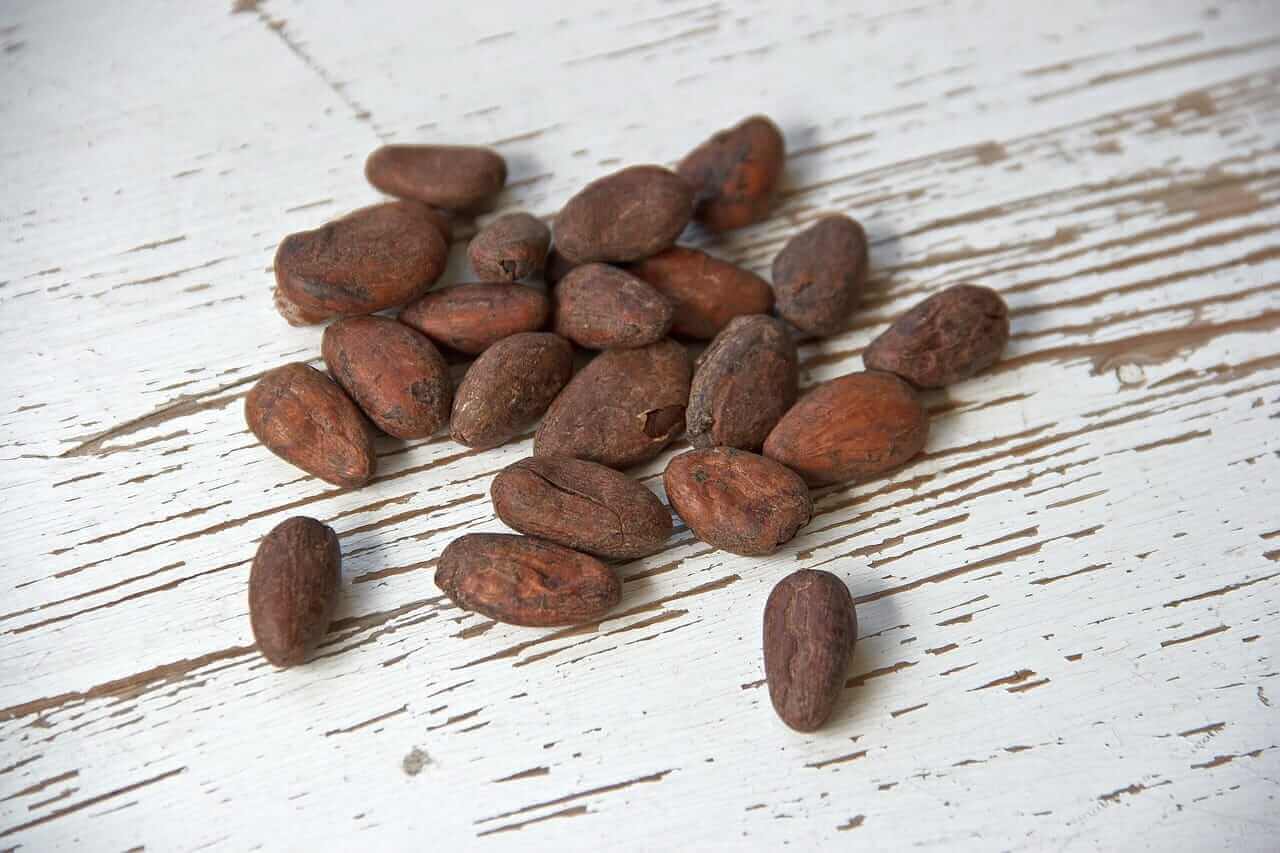
Cacao by Ha11ok via Pixabay
December ICE NY cocoa (CCZ25) is down -24 (-0.38%), and December ICE London #7 cocoa (CAZ25) is down 41 (-0.90%).
Cocoa prices are trading lower today, with New York cocoa retreating from a three-week high and robusta retreating from Thursday’s three-week high. Cocoa prices are experiencing some long sell-off pressure ahead of the weekend.
Supply concerns support cocoa prices after the EU on Tuesday proposed only a six-month delay in enforcing its deforestation laws, instead of the previously announced one-year deadline. Deforestation laws would require traceability requirements for agricultural products, including cocoa, produced in countries where forests are cleared for agriculture, which could restrict supply, as agricultural products from these countries would not be allowed in the EU.
Tighter cocoa inventories support prices after ICE-monitored cocoa inventories at US ports fell to a 6.5-month low of 1,854,690 bags on Wednesday.
An excessively short position by commodity funds in London cocoa futures could exacerbate any short-covering rally. The funds increased their net short positions in London cocoa by 2,286 to 13,057 in the week ending October 14, the largest short position in more than three years, according to weekly Commitment of Traders (COT) data released last Friday. The US government shutdown has delayed the publication of figures on the positioning of cocoa in New York.
Signs of a slowdown in cocoa exports from Ivory Coast, the world’s largest cocoa producer, also support prices. Government data on Monday showed that Ivory Coast farmers shipped 133,209 MT of cocoa to ports in this new marketing year, October 1-19, down -31% from 192,804 MT in the same period last year.
Weak global demand for cocoa is bearish for prices. Last Friday, the Asian Cocoa Association reported that cocoa grinding in Asia in the third quarter fell -17% year-on-year to 183,413, the smallest grind for a third quarter in 9 years. Additionally, last Thursday, the European Cocoa Association reported that European cocoa grinding in the third quarter fell -4.8% year-on-year to 337,353 MT, the lowest level for a third quarter in 10 years. The National Confectioners Association reported that coca grinding in North America in the third quarter increased +3.2% year-on-year to 112,784 MT, but the addition of new reporting companies skewed the data.
Cocoa prices have been under pressure for the past two months amid fears that high cocoa prices and tariffs could curb demand for chocolate. Chocolate candy sales volume in North America declined more than -21% in the 13 weeks ending September 7, compared to the same period last year, according to data from research firm Circana.
The prospects for a better cocoa harvest in Ivory Coast this year are also bearish for prices. Chocolate maker Mondelez recently said the latest cocoa pod count in West Africa is 7% above the five-year average and “materially higher” than last year’s harvest. The harvest of Ivory Coast’s main crop has just begun and farmers are optimistic about its quality.
Cocoa deliveries in Ghana have increased, weighing on prices. Cocoa arrivals at Ghanaian ports in the four weeks ending September 4 reached 50,440 MT compared to approximately 11,000 MT delivered in the same period in 2024. Ghana is the world’s second largest cocoa producer.
One supporting factor for cocoa is the lower cocoa production of Nigeria, the fifth largest cocoa producer in the world. The Nigerian Cocoa Association projects that Nigeria’s cocoa production in 2025/26 will fall -11% year-on-year to 305,000 MT from the projected 344,000 MT for the 2024/25 crop year. In related news, Nigeria reported that its cocoa exports in August increased +15% year-on-year to 17,239 MT.
On May 30, the International Cocoa Organization (ICCO) revised its global cocoa deficit for 2023/24 to -494,000 MT from a February estimate of -441,000 MT, the largest deficit in more than 60 years. ICCO said cocoa production in 2023/24 fell 13.1% year-on-year to 4,380 MMT. ICCO stated that the global cocoa stock-to-grind ratio in 2023/24 decreased to a 46-year low of 27.0%. Looking ahead to 2024/25, ICCO forecast a global cocoa surplus of 142,000 MT on February 28, 2024, marking the first surplus in four years. ICCO also projected that global cocoa production in 2024/25 will increase +7.8% year-on-year to 4.84 MMT.
On the date of publication, Rich Asplund had no (directly or indirectly) positions in any of the securities mentioned in this article. All information and data in this article are for informational purposes only. For more information, see Barchart’s Disclosure Policy here.
