
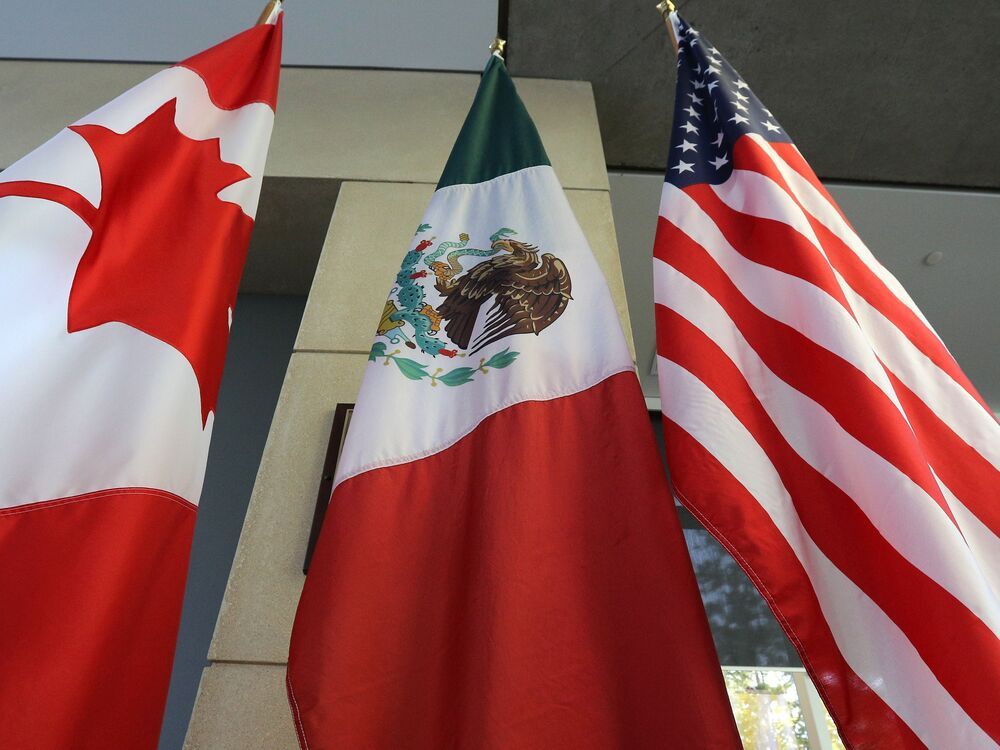
With the fate of the Canada-United States-Mexico Agreement (CUSMA) currently at stake, a new KPMG survey shows the extent to which trade with the United States is a concern for Canadian business leaders.
Of the 501 leaders surveyed by KPMG, more than ninety per cent believe the biggest risk to Canada’s economy is a negative outcome in the renegotiation of free trade with the United States.
88 percent said losing existing protections under CUSMA is the biggest risk to their companies, and 84 percent expect to pay some amount of U.S. tariffs even if their products qualify under a new trade deal.
While the vast majority of respondents (88 percent) agree that tariffs are having an effect, the impact has been more moderate than expected. Still, most leaders reported that tariffs have made their companies less competitive.
82 percent also believe U.S. tariffs against all countries, including Canada, will remain in place.
“While exemptions for CUSMA-compliant products are providing an escape route from many U.S. tariffs, the framework and rules may change under a new trade agreement in the future,” said Joy Nott, trade and customs partner at KPMG.
“Historically, a North American free trade zone has allowed the three countries to act against threats to the global supply chain and work together in a highly competitive global trade environment. However, we could see a situation where a bilateral agreement with the US replaces CUSMA in 2026 and alters the playing field,” Nott said.
Four in five business leaders say they would support a bilateral agreement with just the United States, although they would prefer a trilateral agreement with Mexico. Many leaders said the cost of moving to foreign markets was prohibitively expensive, and seventy-three percent said they could not afford the additional costs associated with such a move.
For the moment, many Canadian companies have taken short-term measures to mitigate the challenges presented by the trade war. Sixty-eight percent reported that they had or planned to pass on additional costs to customers.
Another 79 percent of business leaders said they have reduced or plan to reduce their workforce in the next six months.
The survey also said 93 per cent of respondents agreed that the unpredictable nature of US trade policies and the cost of accessing the US market are among the most pressing issues facing the Canadian economy.
“The full effect of the US tariffs is only beginning to make its way through the economy now. In the initial phase, affected companies chose to absorb the tariffs, while in the future we expect to see more companies pass on the costs of the tariffs to end consumers,” said Lachlan Wolfer of KPMG Law.
KPMG’s 2025 Federal Budget Survey was conducted between September 11 and October 2 and asked Canadian business owners or executives across all industries about their priorities ahead of the November 4 federal budget.
