
Dividend Folder by Elena_Dig via Shutterstock
Target Corporation (TGT) announced plans to eliminate approximately 1,800 corporate positions on Oct. 23, its first major workforce reduction in a decade. The cuts include around 1,000 current positions and 800 vacant positions, or approximately 8% of the global corporate team.
The move comes as sales remain under pressure, with a 1.9% drop in comparable store sales in the most recent quarter and essentially flat annual revenue over the past four years. TGT shares have fell 31.97% so far this year (YTD), closing at $92.91 on October 30.
Even with the drop, the stock still pays a high-yield dividend of 4.84% annually. The company’s market value has fallen to $43 billion and the stock is down 64% from its all-time highs, behind key rivals such as Walmart (WMT) and Costco (COST).
Still, Jefferies analyst Corey Tarlowe maintained a “Buy” rating after the announcement, calling the move painful but necessary and suggesting that incoming CEO Michael Fiddelke, who will take over in February 2026, is ready to make tough decisions after several years of weak results.
Can these drastic cuts really lay the groundwork for a turnaround, or are they simply a desperate attempt to stop the bleeding at a retailer that has lost its competitive edge? Let’s find out.
Target’s current financial situation
Target operates one of the most recognized discount retail chains in the U.S., with more than 1,900 stores and a model that connects in-store shopping with fast digital fulfillment like Drive Up and same-day delivery.
During the last 52 weeks, TGT shares are down 38.01%showing that investors have been concerned about weaker demand.
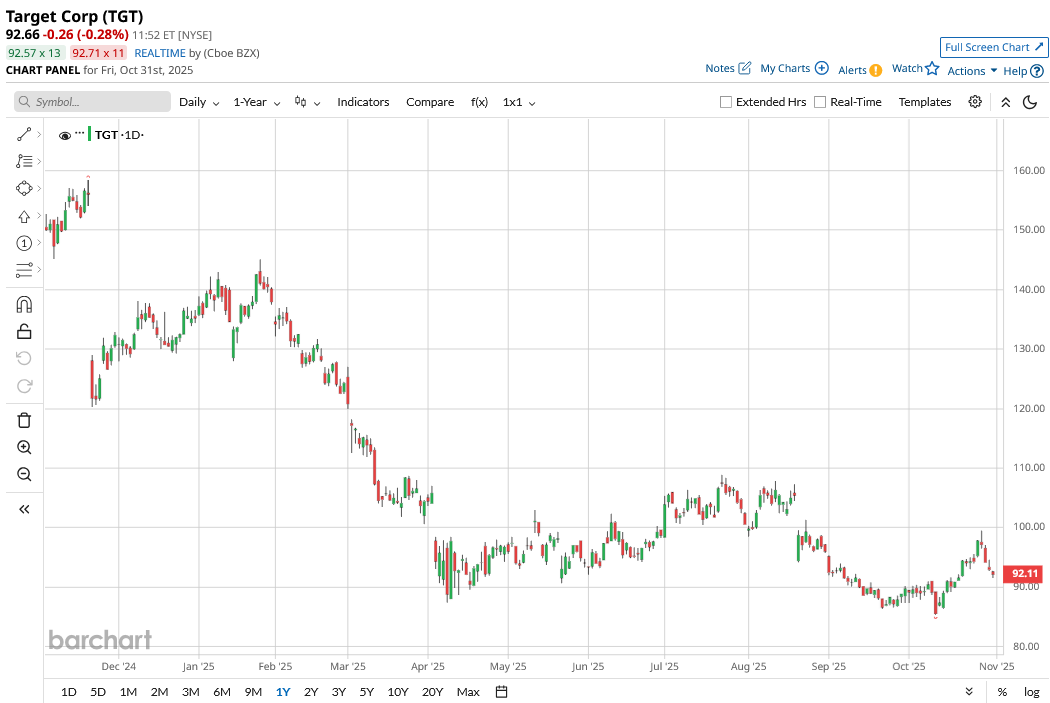
Still, the shares look cheap in relative terms: the The forward P/E is 12.68x versus 16.06x for the Basic Consumer sector, which points to a notable discount.
In it second quarter of 2025Net sales were $25.2 billion, down 0.9% year-over-year, an improvement of nearly two percentage points compared to the first quarter. Comparable sales fell 1.9%, and stores fell 3.2%, partially offset by 4.3% growth in digital. Traffic fell 1.3% and the average ticket fell 0.6%.
Profitability declined: Operating income fell 19.4% to $1.3 billion and gross margin compressed 100 basis points to 29% due to higher markdowns, purchase order cancellation costs and mixes. Diluted EPS was $2.05, down 20.2% from $2.57 and just below the consensus of $2.09. There were some clear offsets: Non-merchandise sales were up 14.2% with Roundel advertising, membership and marketplace growing in double digits, and digital comps were up 4.3% with more than 25% growth in same-day delivery through Target Circle 360 plus continued Drive Up momentum.
What’s driving Target’s strategic reset?
Target supports its growth plan by adding new features to stores, a first of its kind. self-checkout experience accessible nationwidedesigned specifically for guests with disabilities, including those who are blind or have low vision. These updates will roll out to stores nationwide this holiday season and into early 2026.
At the same time, Target is working with Alloy.ai to improve your supplier network. Alloy.ai takes sales and supply chain data, detects when store shelves are running low, and determines what needs to be restocked. This system should save time, help stores avoid empty shelves, and ensure popular products don’t go out of stock—good news for sales and inventory turns.
aim focus on digital sales It is also improving. Online and same-day delivery services saw notable growth this quarter, with Drive Up and Target Circle 360 leading the way. These options give shoppers more reasons to visit Target, especially as more people want quick, convenient ways to shop.
For income-focused investors, the dividend remains a key draw. He annual performance is 4.50% to 4.63%, well above the consumer staples average of 1.89%. The forward payout ratio stands at 58.62%, backed by 55 consecutive years of dividend increases, and the most recent quarterly dividend was $1.14 per share paid on August 13.
Analyst Confidence in Target’s Path Forward
For fiscal year 2025Management expects a small single-digit decline in sales, with GAAP EPS between $8 and $10 and adjusted EPS, which excludes litigation gains, between $7 and $9.
Beyond Jefferies, DA Davidson remains one of the most positive voices. On October 13, it lowered its price target from $115 to $108, but maintained a “Buy” rating. The firm points to cost control and recovery plan, arguing that tough job cuts should lift margins as cost actions flow through the results.
A day later, Evercore ISI’s Greg Melich took a more cautious stance, cutting the target from $103 to $100 and maintaining an “Inline” rating. Evercore pointed to heavier promotions and weaker store sales as key issues, the kind of short-term pressures that temper sentiment even as operations improve.
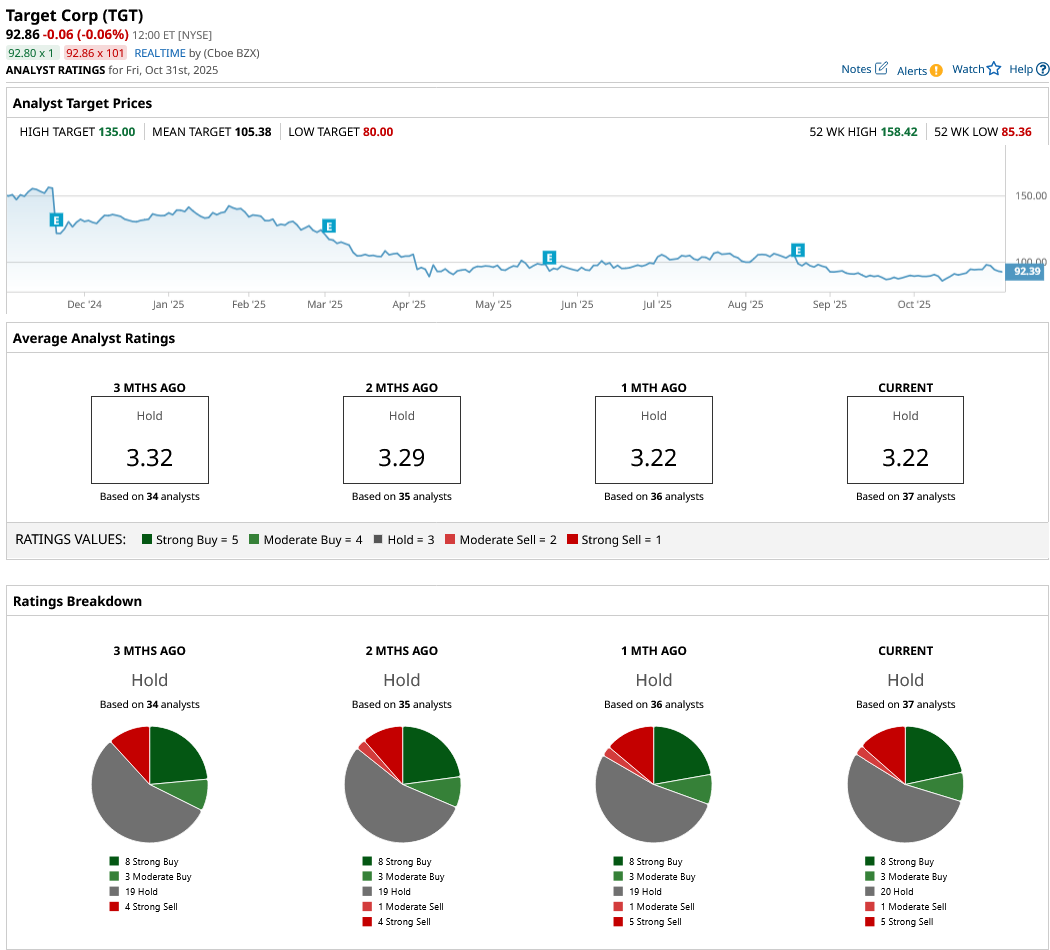
The consensus is firm but cautious. Among 37 analysts, TGT Stock Maintains an Overall Rating of “Hold”. The average price target is $105.38, suggesting an upside of around 13% from the current price.
Conclusion
When all is said and done, Target’s sweeping layoffs and tech-driven reboots are tough pills to swallow, but they could be just what the retailer needs after years of stagnation. With new leadership and a leaner playbook, the odds of seeing a modest improvement are reasonably strong, especially for patient income investors attracted by the high-yield dividend. If progress is maintained and consumer demand stabilizes, the stock could finally find its footing. So next year looks more promising than the last, although caution still makes sense.
As of the date of publication, Ebube Jones had no (directly or indirectly) positions in any of the securities mentioned in this article. All information and data in this article are for informational purposes only. For more information, see Barchart’s Disclosure Policy here.
